


This Is How China Made A Huge Black Market Out Of Damaged Western CDs To Skirt Bans On Music
Did you know that China's Communist party once banned most Western music just a few decades ago? Despite this restriction, there was a unique method used to skirt this form of music censorship before the digital era.
An Instagram content creator recently went viral for explaining the Chinese phenomenon of "Dakous," damaged Western CDs that were sold for cheap and allowed many Chinese people to access Western music.
The video has since garnered millions of views in days, as well as many comments from users speaking about their own personal stories involving the history of Dakous.
ForeignerHat is an Instagram creator whose content focuses on the Chinese underground music scene. His content usually gets a healthy amount of views, but his most recent video has quickly become his first viral moment.
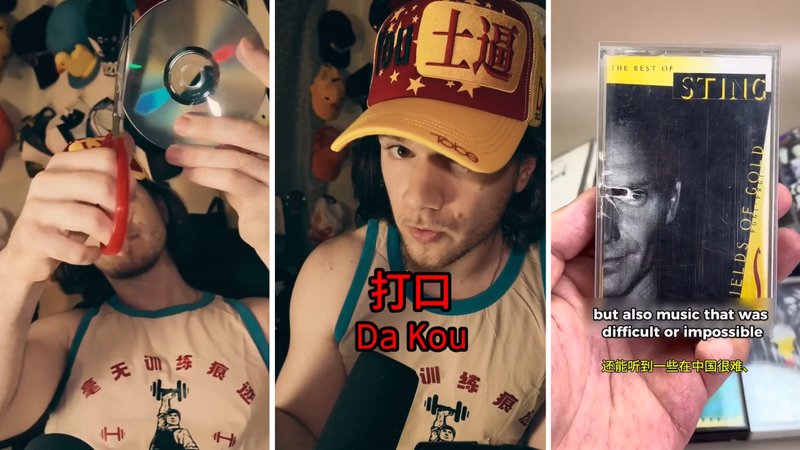
In his viral post, ForeignerHat explains the peculiar way in which Western music reached young Chinese people in the 1990s: through broken CDs.
"Do you know how the Chinese youth listened to Nirvana in the '90s?" ForeignerHat asked at the beginning of his video, before cutting off a bit of a CD’s edge, "Like this."
"These broken CDs were called Dakou," he explained. "In the '90s, Western record labels had a problem: millions of unsold CDs and cassettes, and no cheap way to get rid of them, so they did the minimum by cutting or drilling holes into them, and sold the now unsellable stock as plastic trash to China, by weight."
ForeignerHat then explained how the plastic trash became a treasure for Chinese music fans. "A lot of these ended up in Guangdong [province], where people quickly realized something," he said. "A CD plays from the center out, so if the hole was near the edge, you might have just lost the final minutes of it."
"But the kids didn’t care," ForeignerHat continued, "because for 10 to 20 yuan, they not only could get an album that might otherwise cost over 100, but also music that was difficult or impossible to legally access in China, and so a huge black market grew around these damaged records."
And how big were Dakous, exactly? ForeignerHat said that "according to estimates, by the mid-90s, Dakous were 95 percent of all Western music in China."
"As China and its amazing people constantly remind us, if life gives you trash, make a music scene," he concluded.
This video attracted a great deal of comments from Chinese people who had experienced the Dakou phenomenon firsthand, reminiscing about listening to the broken CDs and recounting the ways in which accessing this music helped them in life.

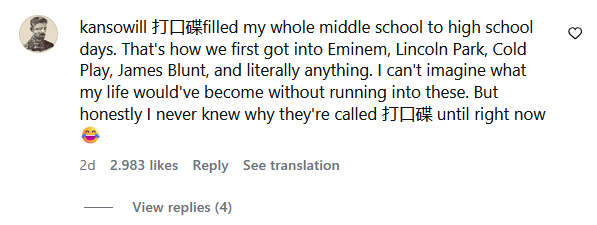

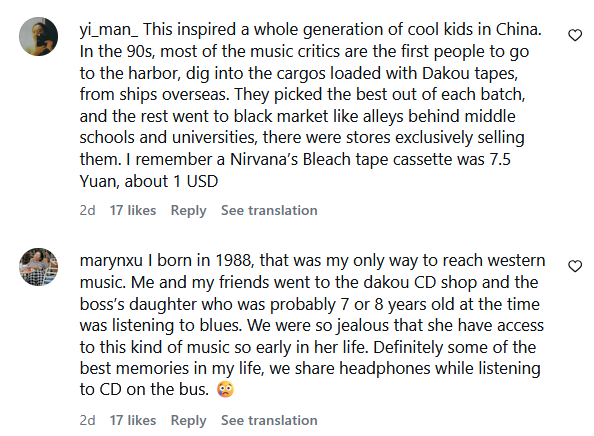
"That is the same for J-pop too," one commenter added, "but instead of [Dakous], we get all the [promotional samples] and [unsold bargain-bin records]. [Ginggung] in Guangzhou was the place to go."